
I want to tell you about a boy who taught me marketing lessons on the Camino de Santiago.
Two weeks ago I was walking a seventeen-mile day through the vineyards and mountains of northern Spain with my brothers-in-law and one of my closest friends from Costa Rica. It was hot, almost ninety-five degrees. This is when water is not enough. I was also drinking electrolytes, and if you have ever tried them, they’re not the best. But around mile twelve, on a long incline heading up toward a small town where the restaurants were, we crested a hill and saw exactly what a pilgrim who has been walking since dawn most wants to see.
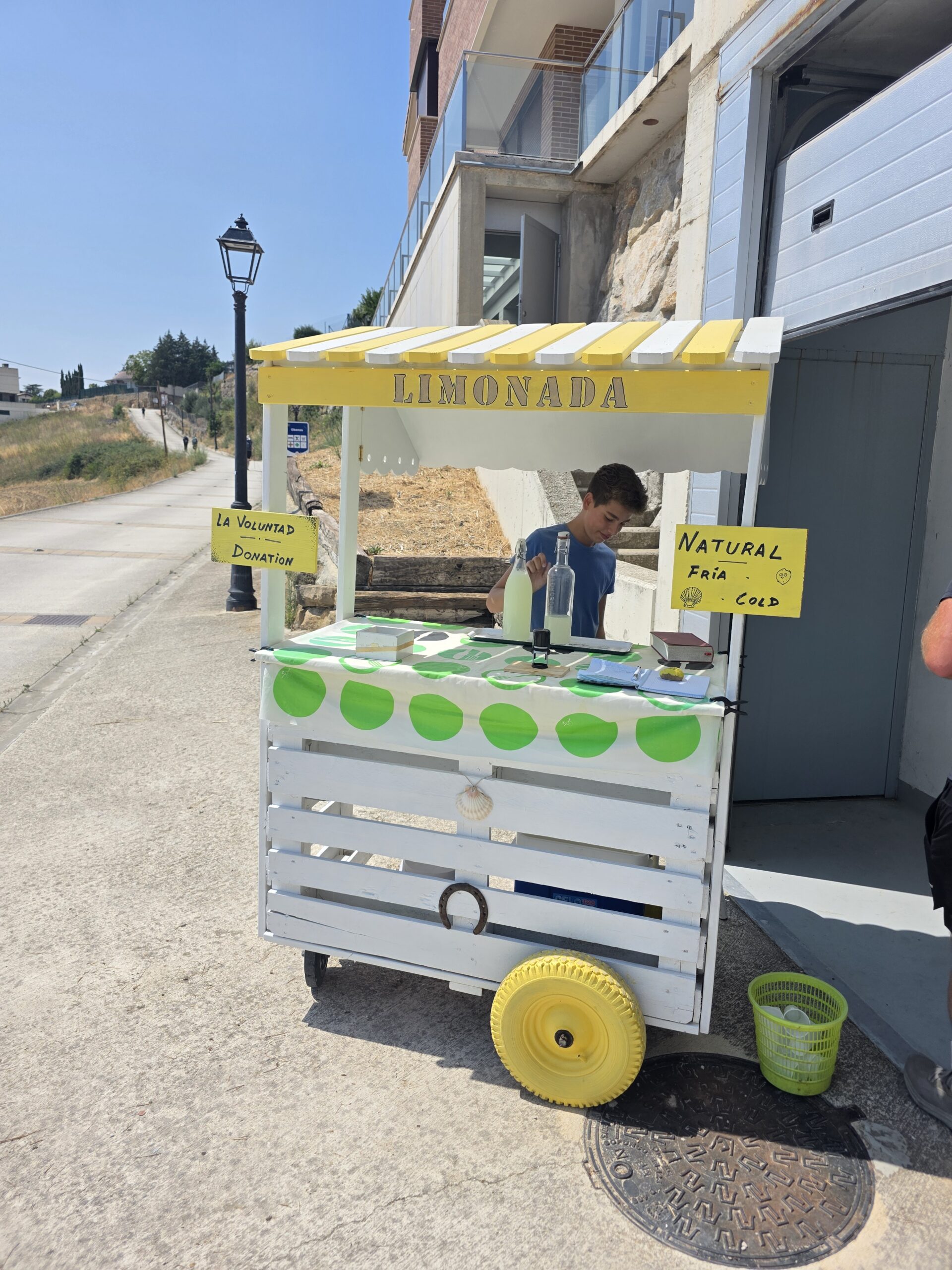
A boy. A homemade wooden lemonade stand. Painted white with yellow trim, bright enough to be visible from a hundred meters away. And a sign that said, in two languages (thankfully the ones I speak LOL), everything a thirsty pilgrim needed to know.
Natural. Fría. Cold.
The picture you’re looking at is exactly what we saw when we came over that hill. Finally, a place for a nice juice. For some healthy drink that will help me finish the day. So I did.
I stopped for a lemonade. I ended up staying for a marketing lesson. Because that kid, who could not have been more than twelve years old, understood marketing better than most businesses I have worked with in nine years of running an agency.
I want to walk through the marketing lessons he taught me, because it is the whole thing, and most of us are getting one part of it wrong on any given day.
Right Audience
The Camino de Santiago is a pilgrimage. On any given day in summer, thousands of people walk stretches of it from all over the world. They speak Spanish, French, Italian, German, English, Portuguese, and every other language you would hear at an international airport. They wear the same kind of backpacks. Many of them carry a scallop shell, the traditional symbol of the pilgrimage.
Look closely at the corner of that boy’s sign. He drew a scallop shell. One small mark. A signal to every passing pilgrim: this is for you. I know exactly who you are.
Right audience isn’t just “thirsty people.” It’s pilgrims walking the Camino, from many countries, on this specific stretch of trail, on a specific day of walking. That’s how specific “right audience” actually needs to be. Not a demographic. But much more like a situation.
Right Message
The main message on the sign is three words. Natural. Fría. Cold. Two of them are the same word in different languages. That is not an accident. It is precisely calibrated for who is walking past.
He didn’t advertise his story, his family, or the recipe, the ingredients, or how he woke up early to squeeze the lemons. He advertised the thing every single person on that trail was already saying in their own head after twelve miles in the heat.
Three words, all of them words the customer was already thinking, in the language they were already thinking them in. Exactly what you want in an amazing lemonade.
That is what the right message actually means. Not clever, not creative, not aspirational. The exact words your customer is already saying, in the language they are already saying them, on the day they are saying them.
Right Time
We got to that lemonade stand around one in the afternoon. Ninety-five degrees. Mile twelve of a seventeen-mile day. Two hours after the last shady spot. Still about one or two hours of walking to reach the town where we could sit down for lunch.
We were exactly the customer that boy was set up to serve, at exactly the moment we were most ready to be served.
If he had set up his stand at seven in the morning, when pilgrims were leaving the last town cool and rested, he would have made almost nothing. Or if he had set up in the town square where cafes and restaurants already sold cold drinks, he would have been outcompeted in a moment. Or if he had picked a random spot on a flat stretch of trail, pilgrims would have walked past because they didn’t yet feel the need.
He picked the exact place on the exact stretch of trail where the customer’s need was highest and the competition was lowest. When I told him he had “a really good real estate,” he grinned. He knew.
Right time is location plus moment. You cannot show up to a market ready to buy at a time when nobody is paying attention, and you cannot show up when your customer needs you if you are not physically or digitally in front of them. The kid was there. In the heat. At the base of the incline. At the only entrance to the town.
The Move That Made the Whole Thing Work
There is one more thing about that stand, and it’s the part I have not been able to stop thinking about.
He did not put a price on the sign.
Where the lemonade might have said “2 euros,” his sign said, in Spanish, la voluntad. Donation. Whatever you feel like giving.
Here’s what happened. Every single pilgrim who stopped gave more than two euros. Some gave five. Some gave ten. Because the moment you drink cold, natural lemonade at mile twelve on a ninety-five-degree day, two euros feels like an insult to the boy who put it in your hand.
If he had priced it at two euros, some people would have walked past because they didn’t have small bills. Some would have haggled or done the mental math on whether they really needed it. Some would have felt like it was just a transaction and moved on.
By making it a donation, he turned the moment into something else. It became a gift the pilgrim received and answered back in kind. Trust in both directions. And economically, he made significantly more than he would have on any fixed price.
What the Donation Proved
One of my team members put it perfectly when I brought this story back to a Lifedge team meeting. She said, “If you have the right message to the right audience at the right time, it doesn’t matter, because a donation will be made.” That applies to nonprofits, sure. But it also applies to any business that has actually gotten the three things right. When the fit is that clean, customers aren’t reluctant. They don’t think about price because all the other variables are perfect; they’re grateful.
I have to be honest, I don’t think this kid was thinking about capitalism or how to run a business at the moment. Honestly, after walking the Camino, it seems he was just a young boy wanting to do something nice and show kindness to pilgrims, and this was his way of doing it.
At the same time, my mind thinks about marketing in many different ways, and this is why I’m bringing up this conversation to you today.
The Marketing Lessons for Your Business
Almost every business I talk to is trying to reach a broad audience with a general message at a random time. And it isn’t working, and they don’t know why.
The reason is almost never one of the three things in isolation. It’s the combination. The message might be fine and the timing is wrong. Or the audience might be right and the message is generic. Or the timing might be perfect and nobody knows who your message is for.
Ask three questions of your own marketing this week.
Who is the exact person we’re talking to right now? Not “our customer.” Not “small businesses.” A specific person on a specific journey at a specific stage. The pilgrim, not “people who like drinks.”
What are the exact words that person is already saying in their head? Not what you want them to know. What they are already thinking about. Write those words on your sign.
Where and when do we show up? Are we at the base of their incline, in the heat, right before they reach the next town? Or are we at seven in the morning in a town square where a dozen cafes are already competing on the same offer?
If your answers to those three questions don’t line up with each other, you have a lemonade stand set up at the wrong time in the wrong place, with a sign nobody can read. Change any one of the three, and you will move more sales tomorrow than a full quarter of tweaking colors and headlines will give you.
One Last Thing
As we were leaving, one of my friends looked at the boy and said, “He’s making more money than all of us in a day.” And he smiled at us and said, “Thank you.”
I think that’s probably true. I also think that kid is going to have a good life. First because of his heart of kindness, second because he already understands the one thing that most businesses can’t put into action.
If you’re running a business and you find yourself working harder and harder to attract customers who don’t quite fit, or converting fewer of the ones who do show up, spend an hour this week thinking about the boy on the trail. Simplify. Get specific. Show up at the right place, in the right words, at the right moment.
If you want to think through what these marketing lessons could look like for your own business, reply to this post or send us a note. We’d be glad to walk through it with you.








0 Comments